

E-Mobility Thema's
Electric Mobility Modes
Business & Finance
Integration
Operation
Policy
Sustainability
Electric Mobility Modes
Different vehicles serve different mobility needs. Selecting an appropriate electric mobility solution should begin with the movement of people and goods rather than with a particular technology.
Key considerations include daily distance, passenger or freight capacity, route predictability, terrain, climate, vehicle utilisation, charging time, grid availability, purchase price, operating costs, maintenance capacity and user affordability.
High-utilisation fleets can be particularly suitable for early electrification because fuel and maintenance savings accumulate rapidly. These may include buses, taxis, motorcycle taxis, delivery vehicles, municipal fleets and shared mobility services. However, electrification should avoid encouraging unnecessary private car use or undermining public transport, walking and cycling.
E-Cars
Electric cars can reduce local air pollution, noise and fossil-fuel consumption, particularly when deployed in high-mileage fleets such as taxis, car-sharing services, municipal fleets and corporate vehicles.
Policies should consider both vehicles and the wider mobility system. Incentives for private electric cars may accelerate market development, but they do not address congestion, road-space consumption or unequal access to mobility. Governments should therefore combine vehicle electrification with investments in public transport, active mobility and shared services.
Implementation measures may include vehicle-efficiency standards, differentiated registration and taxation, fleet targets, charging requirements for buildings, public procurement and support for taxis or shared fleets. Attention is also needed to used-vehicle imports, vehicle and battery standards, electricity tariffs, interoperability and end-of-life responsibilities.
UNEP supports countries in developing electric light-duty vehicle policies, baseline assessments, fiscal and non-fiscal measures, charging strategies and implementation programmes.
E-Bikes

Electric bicycles can extend the range and accessibility of cycling while retaining many of its advantages: low energy consumption, limited use of road space, low operating costs and suitability for short urban trips.
They can support commuting, first- and last-mile connections, tourism, shared mobility and urban freight. Cargo e-bikes are particularly relevant for deliveries in dense areas where vans face congestion, parking constraints and high operating costs.
Infrastructure remains essential. Safe and continuous cycling networks, secure parking, appropriate speed management and integration with public transport are more important than the vehicle technology alone. Shared e-bike systems additionally require robust operations, redistribution, maintenance, payment systems and accessible pricing.
SOLUTIONSplus supported bicycle-sharing and electric bicycle activities in Kigali and electric cargo-bike and light-freight demonstrations in Montevideo. These examples illustrate how electric bicycles can form part of both passenger mobility and urban logistics strategies.
E-Buses
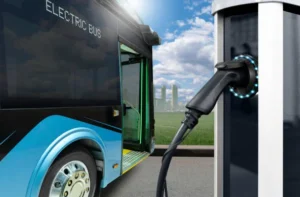
Electric buses can deliver substantial climate, air-quality and service benefits because buses travel long distances, operate in densely populated areas and carry many passengers. Their implementation, however, requires coordinated planning across vehicles, routes, depots, charging infrastructure, electricity supply, contracts and operations.
Route-level analysis should assess daily mileage, gradients, temperatures, passenger loads, dwell times, depot schedules and opportunities for charging. Vehicle and battery specifications should be based on these operating conditions rather than on generic manufacturer data.
Procurement decisions should consider lifetime costs, warranties, battery replacement, charging equipment, grid connections, spare parts, maintenance capacity and service continuity. Depending on local circumstances, cities may purchase buses directly, procure transport services, lease vehicles or batteries, or use mileage-based service models.
In Kigali, SOLUTIONSplus worked with BasiGo and local operators to test electric buses under a mileage-based operating model designed to reduce upfront investment and technology risk. Four buses had travelled more than 51,000 kilometres and carried more than 224,000 passengers by the reported project stage. UNEP separately supports electric bus planning, business models, financing and demonstrations in countries across Africa, Asia, Latin America and the Caribbean.
E-Motorcycles

Motorcycles provide essential mobility and employment in many countries, particularly through motorcycle-taxi and delivery services. Their high annual mileage, intensive fuel use and predictable operating patterns can make them strong candidates for electrification.
Successful business models must address the financial realities of riders. Many drivers do not purchase vehicles outright but rent them, repay them through daily earnings or operate under fleet owners. Leasing, lease-to-own, battery subscription and battery-swapping models may therefore be more suitable than conventional vehicle sales.
Vehicle safety, battery quality, charging or swapping standards, rider training, insurance, maintenance and access to replacement parts must be integrated into programme design. Policies should also avoid creating proprietary battery-swapping systems that lock riders or cities into a single supplier without adequate consumer protection.
In Kigali, SOLUTIONSplus supported electric motorcycle-taxi operations and handed electric motorcycles to a group of women riders. UNEP works with national programmes for electric two- and three-wheelers in countries including Kenya, Rwanda, Uganda, Ethiopia, Tanzania, the Philippines, Vietnam, India and Nepal.
Electric Three-Wheelers

Electric three-wheelers include passenger tuk-tuks and bajajs, cargo tricycles, small delivery vehicles and other locally adapted vehicle types. They are important in cities where they provide feeder transport, informal public transport, local deliveries and livelihoods.
Their electrification can reduce fuel expenditure, noise and street-level emissions, but implementation must reflect the structure of the sector. Many vehicles are individually owned, informally operated or financed through daily payments. Operators may have limited access to commercial loans and cannot afford long periods without a working vehicle.
Programmes should therefore combine vehicle technology with operator finance, charging or battery swapping, route and demand analysis, registration, safety standards, driver training, maintenance and formal engagement with driver associations.
In Dar es Salaam, SOLUTIONSplus examined the operating characteristics of conventional bajajs and supported the development of locally appropriate electric three-wheeler solutions. In Pasig City, local manufacturers developed compact electric vehicles for municipal and community services, including a prototype using second-life batteries.
E-Scooters

The term electric scooter can refer to standing micromobility devices, seated mopeds or small electric motorcycles. Regulation and infrastructure should clearly distinguish between these vehicle types.
Shared standing e-scooters can provide convenient short-distance connections, but their contribution depends on whether they replace car trips or primarily substitute walking, cycling and public transport. Cities should establish rules for parking, speed, operating areas, fleet sizes, data sharing and the use of public space.
Seated electric scooters can be more suitable for longer journeys and commercial uses. In cities where scooters and motorcycles already account for a large share of travel, electrification strategies should address vehicle affordability, home charging, battery swapping, electrical safety and integration with public transport.
Hanoi’s SOLUTIONSplus demonstration explored shared electric bicycles and two-wheelers as connections to public transport, illustrating the potential to link electric micromobility with wider mobility-system improvements.
Electric Freight and Logistics
Urban freight includes cargo bicycles, three-wheelers, small delivery vehicles, vans, municipal vehicles and heavy trucks. These vehicles have very different operating requirements and should not be addressed through a single technology pathway.
Urban delivery fleets are often well suited to electrification because they travel regular routes, return to a depot and accumulate high annual mileage. Route optimisation, consolidation centres, loading zones and logistics planning can reduce energy demand before or alongside vehicle electrification.
For heavier trucks, battery size, payload, charging power, grid connections and driver-rest requirements become increasingly important. Early applications may include predictable depot-to-depot routes, port operations, refuse collection and regional distribution.
In Montevideo, SOLUTIONSplus worked with local companies to demonstrate electric cargo bicycles, tricycles and quadricycles. A short logistics test with a delivery platform completed 156 trips and transported 90 packages. In Pasig, locally produced electric quadricycles were tested for public services. UNEP’s Deliver-E initiative focuses on accelerating the electrification of last-mile delivery, particularly two- and three-wheelers.
Business and Finance
Electric mobility changes how vehicles, energy, infrastructure, and transport services are financed and operated. Higher initial vehicle costs may be offset by lower energy and maintenance expenditure, but these savings do not automatically translate into affordable investment.
An electric mobility business model explains who provides the vehicle or service, who pays, how revenues are generated and how technical and financial risks are allocated.
Possible models include direct vehicle sales, leasing, lease-to-own, battery leasing, battery subscriptions, charging as a service, pay-per-kilometre arrangements, fleet rental, shared mobility and service-based public transport contracts.
The most appropriate model depends on vehicle utilisation and user circumstances. A taxi driver who earns and pays daily may require a different arrangement from a municipal fleet or established bus operator. Business models should therefore be developed with users and tested using real operating data.
In Kigali, the mileage-based electric bus model separates vehicle use from some of the risks associated with batteries and charging. Electric motorcycle initiatives have similarly explored vehicle and battery arrangements adapted to motorcycle-taxi operators. SOLUTIONSplus demonstrations in Quito, Montevideo, Kathmandu and Pasig also worked with local companies to develop business models around light electric vehicles and urban logistics.
Financing is often a greater barrier than vehicle technology. Even when an electric vehicle has lower lifetime costs, operators may be unable to obtain affordable capital or accept the perceived risks of a new technology.
Financing assessments should distinguish between the vehicle, battery, charging infrastructure, grid connection, land, software, training and operational working capital. These elements have different lifetimes, risks and potential sources of finance.
Possible instruments include commercial loans, concessional finance, guarantees, leasing, revolving funds, public co-financing, results-based finance and blended-finance facilities. Public support should address identifiable market barriers and help build a self-sustaining market rather than permanently subsidising individual vehicles.
Financiers require credible data on utilisation, operating costs, battery performance, residual values and repayment capacity. Demonstrations should therefore collect data that can support investment decisions and portfolio development. UNEP’s electric mobility programmes combine policy and technical support with work on business models, investment preparation and access to finance.
Procurement can accelerate electric mobility while improving vehicle quality and creating predictable demand. Poorly designed procurement, however, can result in unsuitable vehicles, incompatible charging systems, inadequate maintenance and costly service interruptions.
Specifications should be based on functional and operational requirements. For buses, this includes route distance, passenger capacity, gradients, climate, charging windows and depot conditions. For other fleets, it may include payload, daily mileage, road quality, charging location and expected vehicle life.
Evaluation should extend beyond the purchase price. Total cost of ownership, energy use, warranties, battery performance, maintenance, spare parts, software, data access, training, safety certification and end-of-life responsibilities should all be considered.
Procurement can also encourage local value creation through training, after-sales services and partnerships with local firms. Requirements must remain realistic and should not unnecessarily exclude smaller or emerging suppliers. Where technology and market conditions remain uncertain, phased procurement and monitored demonstrations can reduce risk before larger contracts are awarded.
Integration
Electric mobility produces the greatest benefits when it is integrated with public transport, active mobility, urban planning, electricity systems and digital services.
An isolated electric vehicle pilot may demonstrate that a technology works,
but it will not necessarily improve accessibility or reduce congestion. Integration asks how electric mobility contributes to the overall movement of people and goods and how it supports wider environmental, social and development objectives.